Join thw Waitlist and get this Professional Tutorial for Half Off This Friday Only, at 4pm PST!
Get 50% Off THIS WEEK ONLY, Before this Painting Goes Back In the Vault!
Join the Waitlist and get this Professional Tutorial for Half Off
Join before Friday at 4PM PST!

From Blank Canvas to Warm Autumn Sky
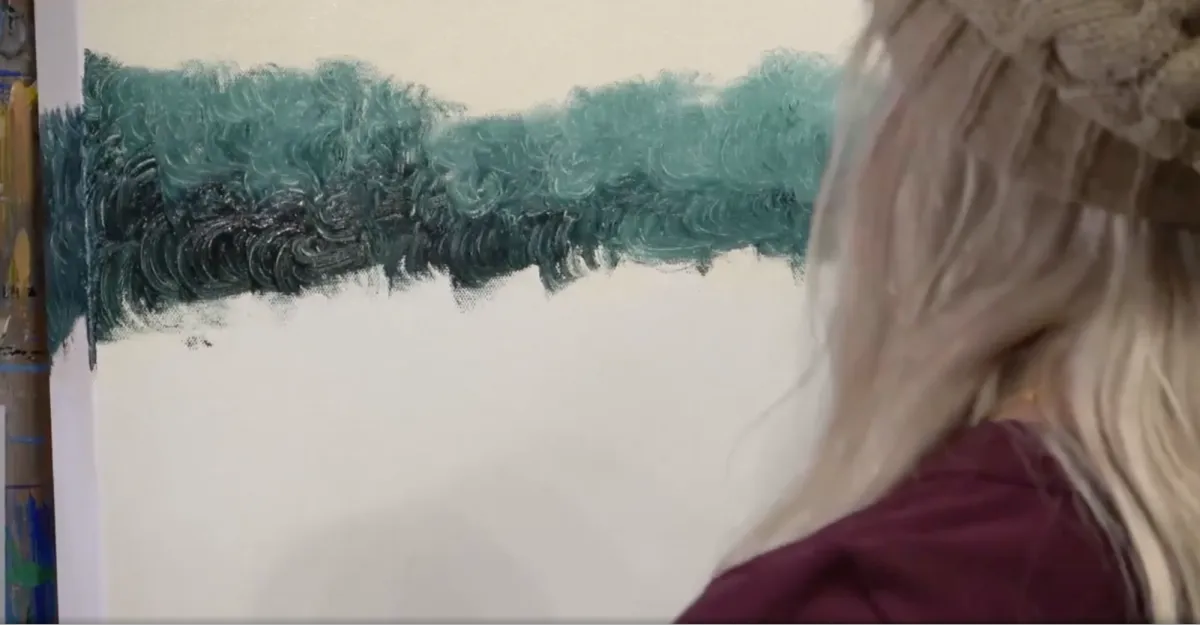
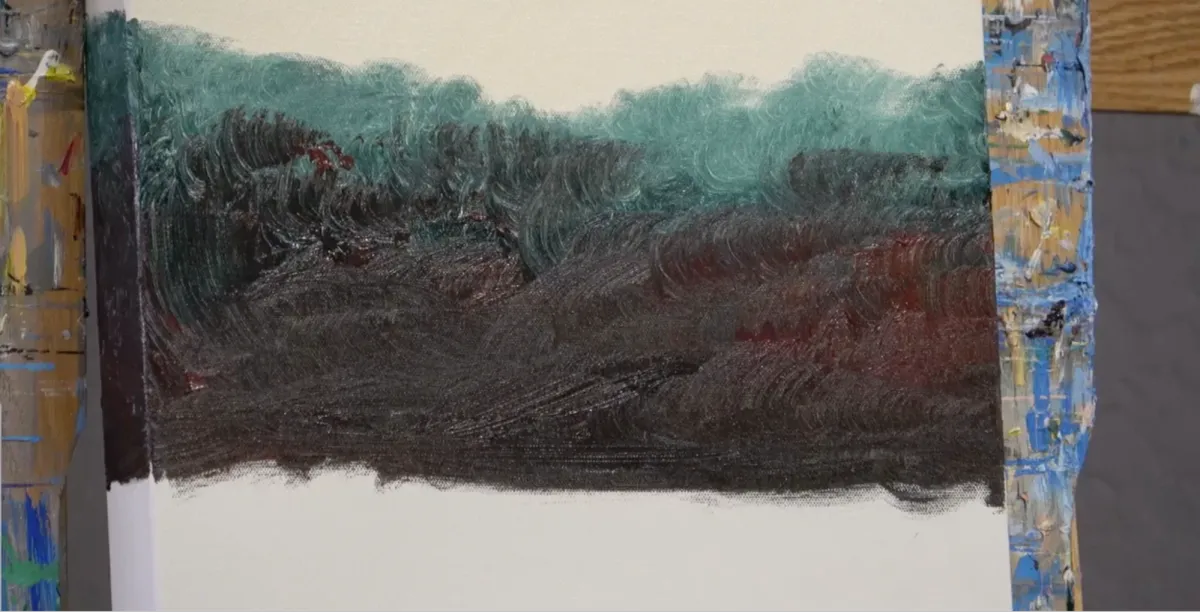
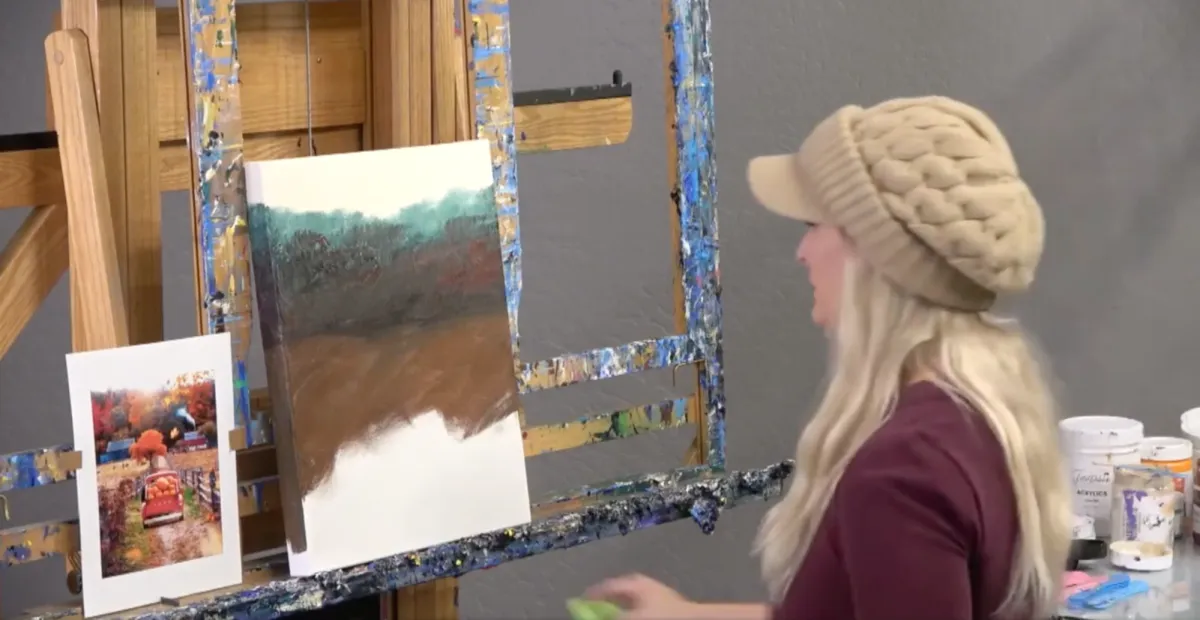
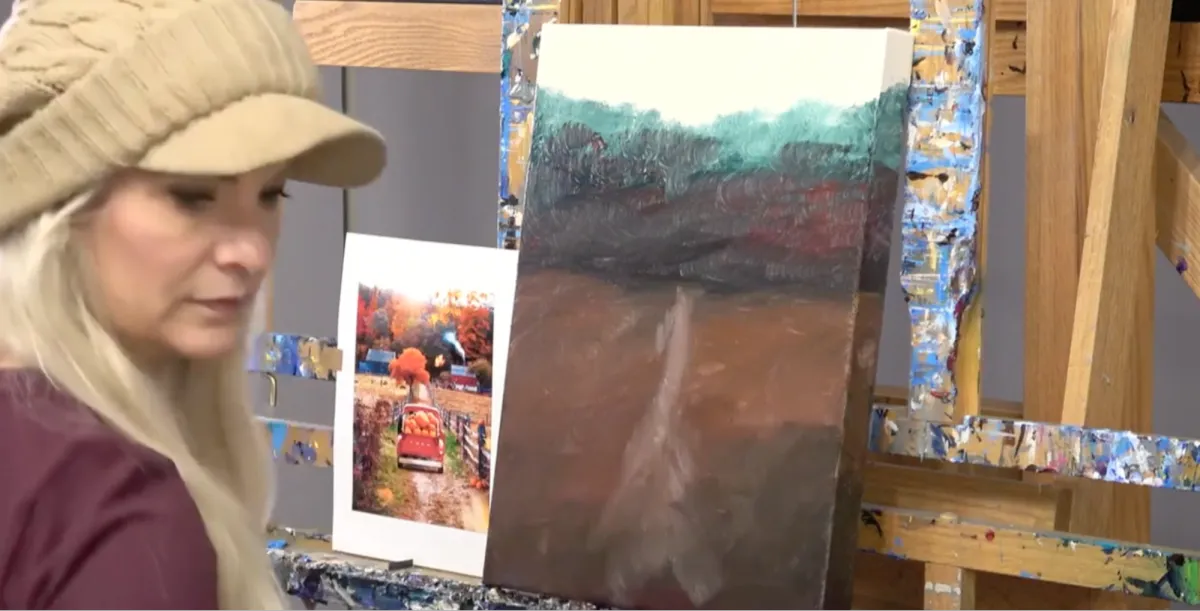
Video #1 - Afternoon Sky
In the first video lesson, you’ll go from blank canvas to cloudy afternoon skies using some extremely easy methods.
Sometimes, getting started can seem overwhelming because there are so many details in your reference photo. But we’re going to break our scene down to the basics so you can succeed even if it’s your first time painting.
We’ll do it using some of my best tips and tricks, such as...
Gorgeous backgrounds in under 10 minutes. As you use my super fast background trick, you’ll feel like an experienced, confident painter right away. Plus, you’ll completely skip the trap of the “blank canvas blues.”
Easy “swoosh” clouds in seconds. You’ll feel a great sense of momentum and pride as you see how incredibly easy it is to swoosh your perfect seaside clouds onto your canvas.
Swooshing the tree line into life. With a few more swirls and drags across your canvas, you’ll create the perfect natural treeline beneath the afternoon sky. It’s as easy as wiping your counters and pretty much the same simple motion any beginner can master in seconds.
Dirt road mapping. This is the first of the techniques we’ll use to get some precision in our painting without ever having to draw or sketch.
Video #2 - Distant Trees
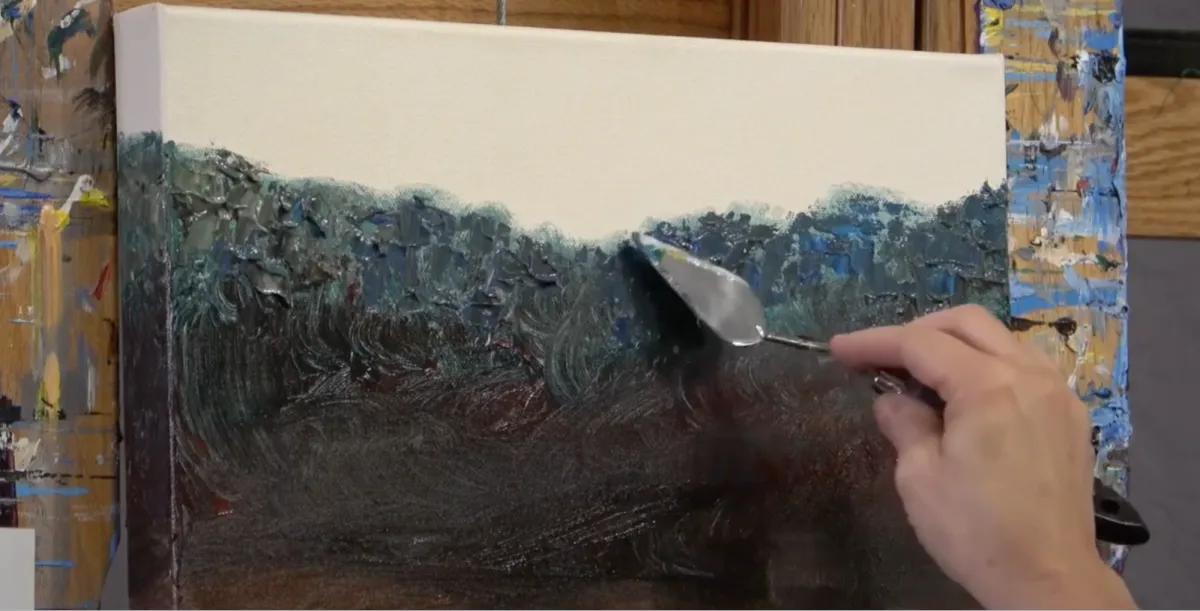
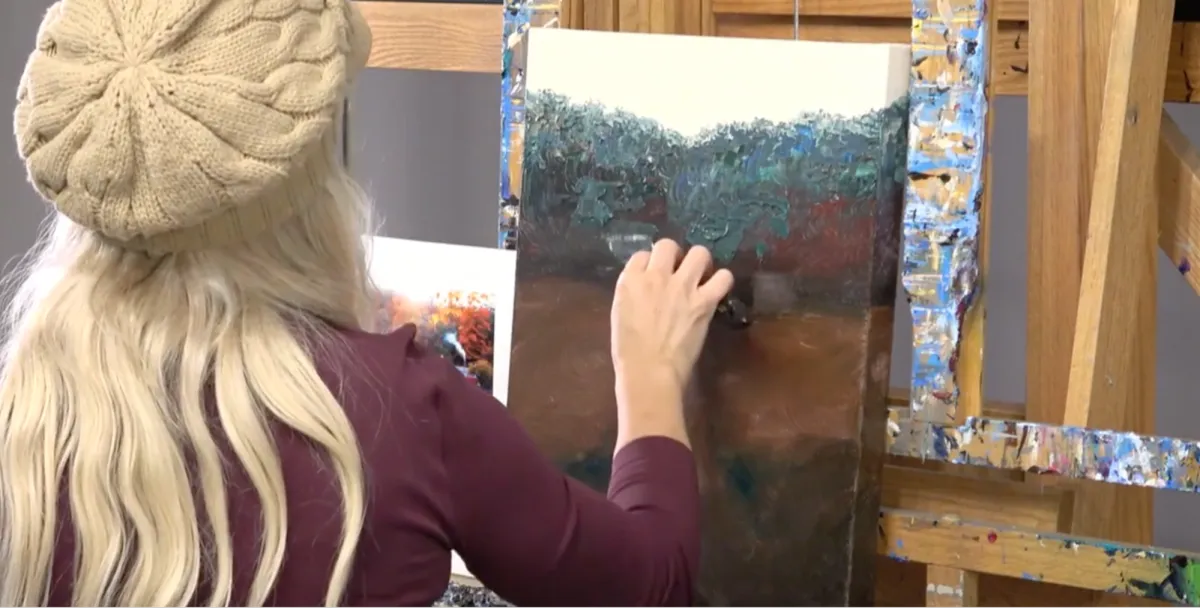
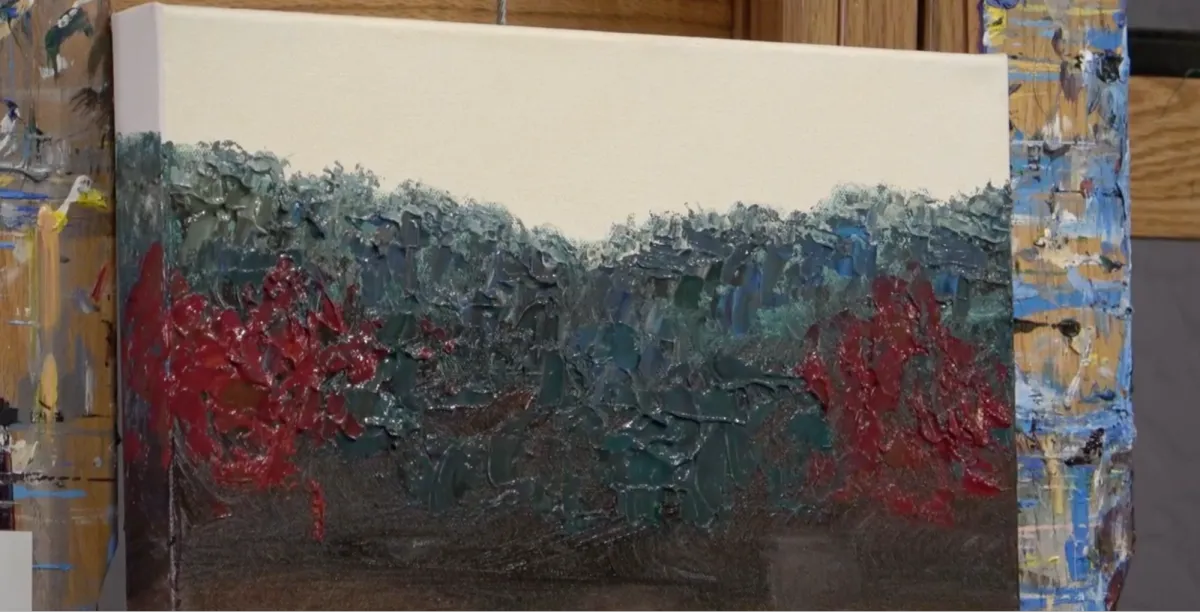
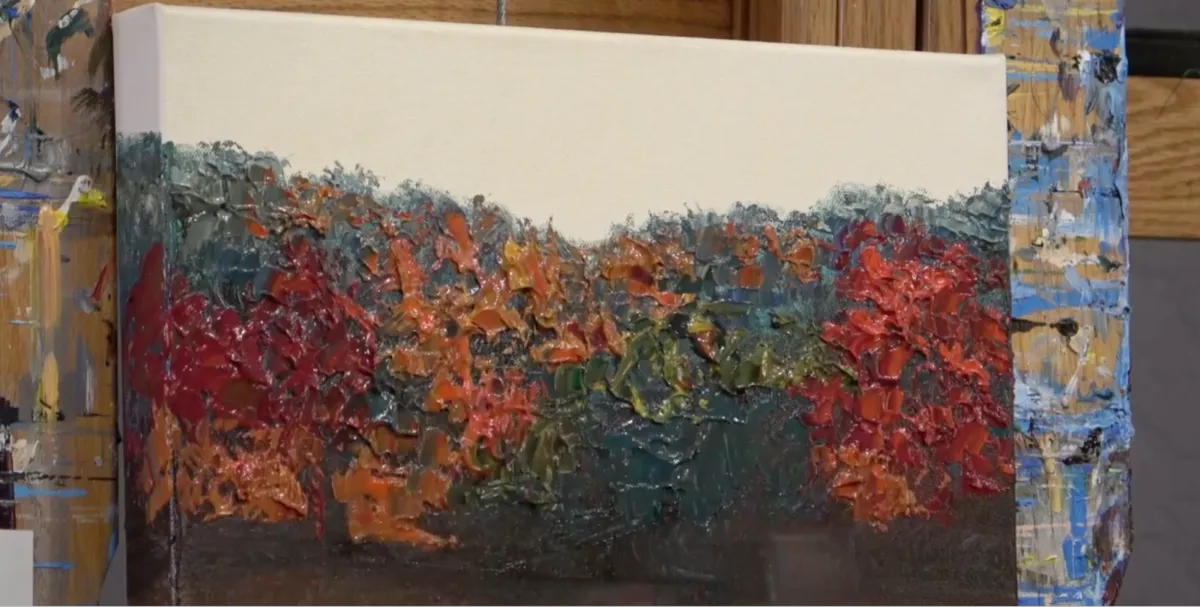
In video #2, you’ll start filling in the warm autumn colors of the leaves on the distant trees. You’ll begin using my “Textures of Life” method to create some wonderful, chunky texture. You’ll discover some simple yet elegant techniques, including…
Background cool down. Most backgrounds are fairly dark. But if they’re too dark, they can make your scene muddy. That’s why I add this “cool-down” color to the underlayer. It thins the murky background so the top layer of trees shines.
Skyline softener. You never want a stark, rigid contrast between the tops of your trees and the sky above. This technique helps you fluff up the tops of the trees as if you can see the sky through the thinning upper tree line.
Better than black. The secret color combination that makes dark shadow more vivid than any tint of black.
Trunk scrapping. How to cut through the texture in an instant to create the hint of the tree trunks in the distance.
My wet-on-wet technique. If you like Van Gogh or Monet, you’re going to LOVE this simple technique. It makes your painting look very professional, and all of the 2,000 beginners I’ve taught pick this up in a matter of seconds.
The “wow” factor. This is how palette knife paintings become so 3D and textured. It’s also what makes this the most forgiving, easiest style of painting anyone can pick up.
Dabbing In Forests of Autumn Color
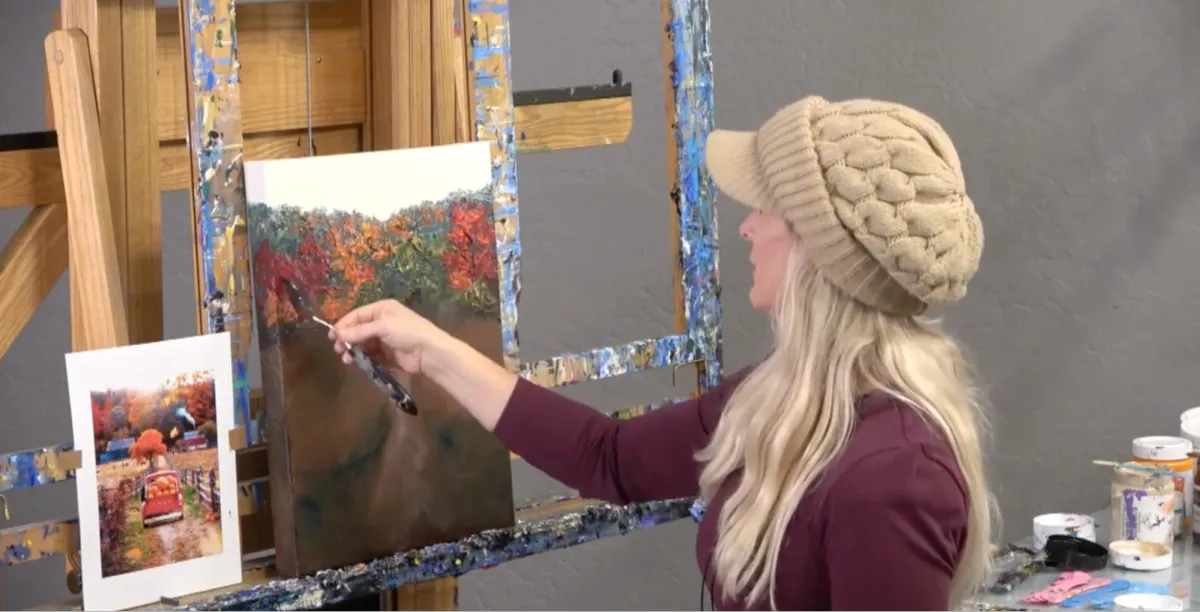
Decorating the Tree Line with an Old Barn
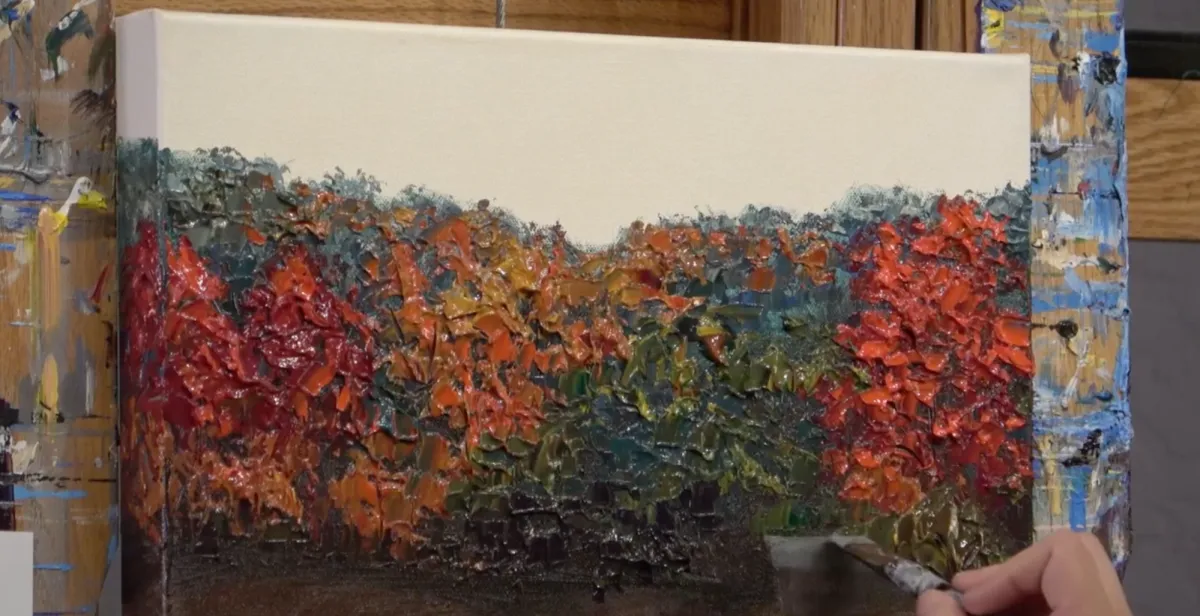
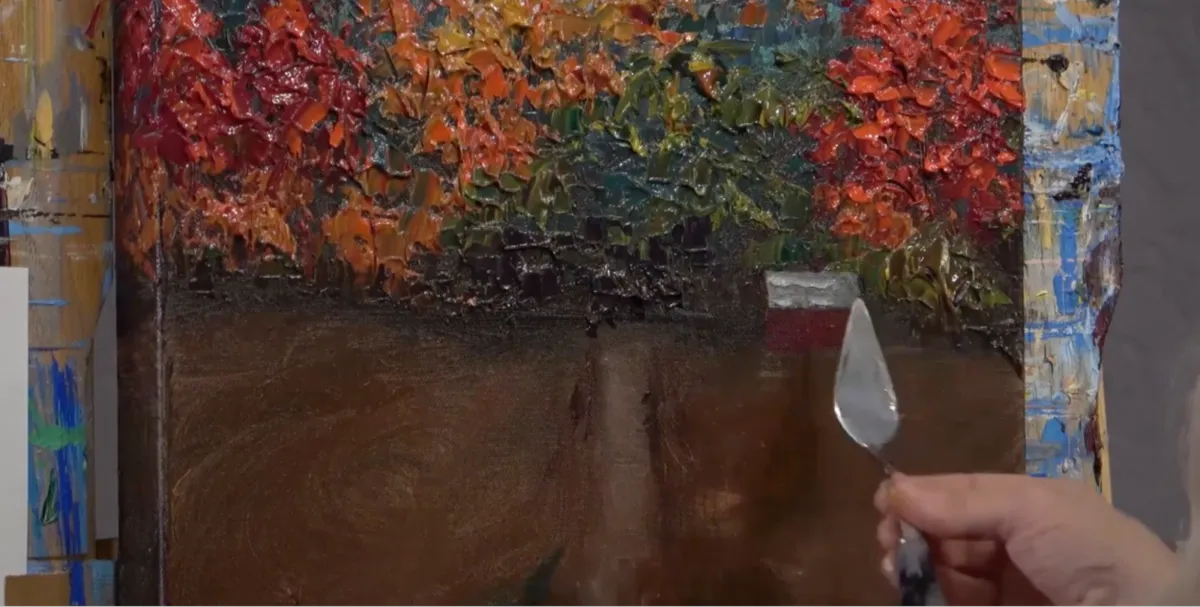
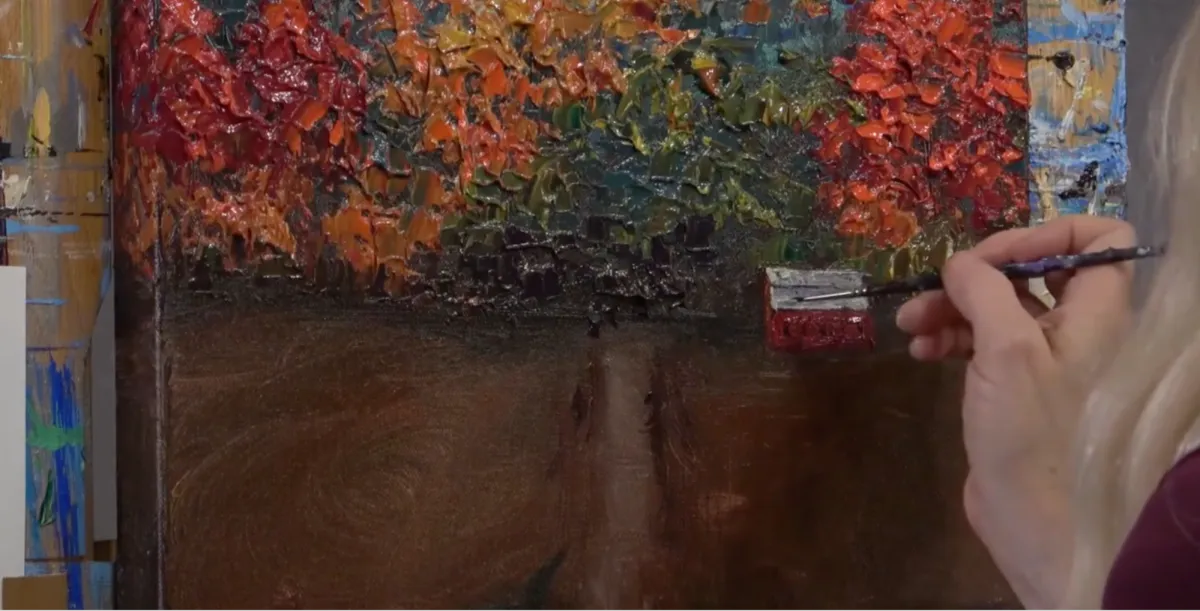
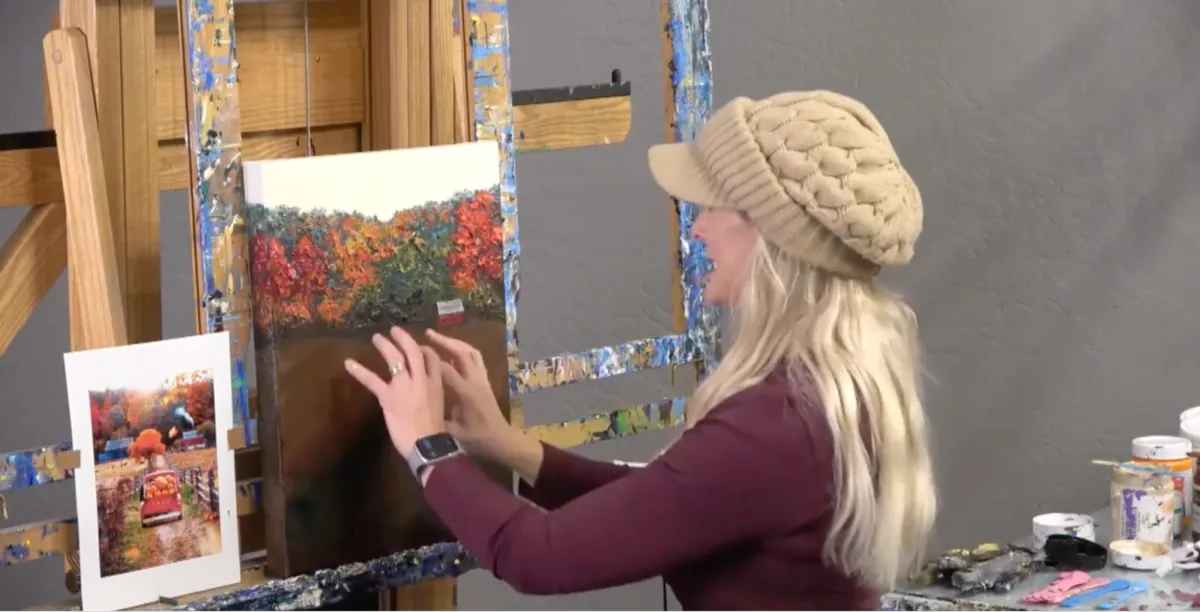
Video #3 - Barn House
In lesson #3, we’ll bring our old barn to life at the base of the tree line. We’ll use a combination of two brushes and a palette knife. But, rather than draw or sketch with our brushes, we’ll simply map in our shapes.
We’ll bring the barn to life without anything more than simple horizontal motions and a few vertical accents. We’ll do all this with techniques such as…
In this video, I’ll teach you many of the core techniques I developed that took me from an amateur to a professional painter, including…
Shape carving. Using the background to bring out the shape of the barn without making it too cartoonish.
Tip dragging. I’ll show you how to give the barn depth and dimension by dragging your palette in a simple, horizontal motion. The key is to use the right color mixture together with the dragging. Otherwise, it will still look 2-dimensional and pretty boring.
Double shade. This is how you’ll age your distant barn, revealing the wear and tear of too many winters with a simple bit of layering.
Video #4 - Pumpkin Patch & Hay Field
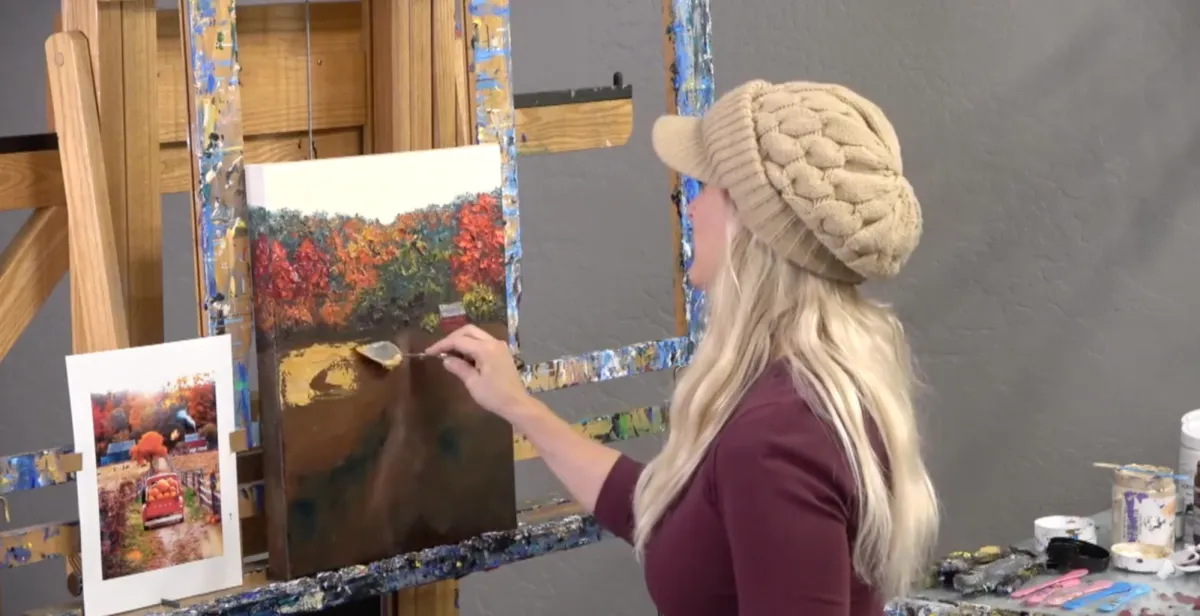
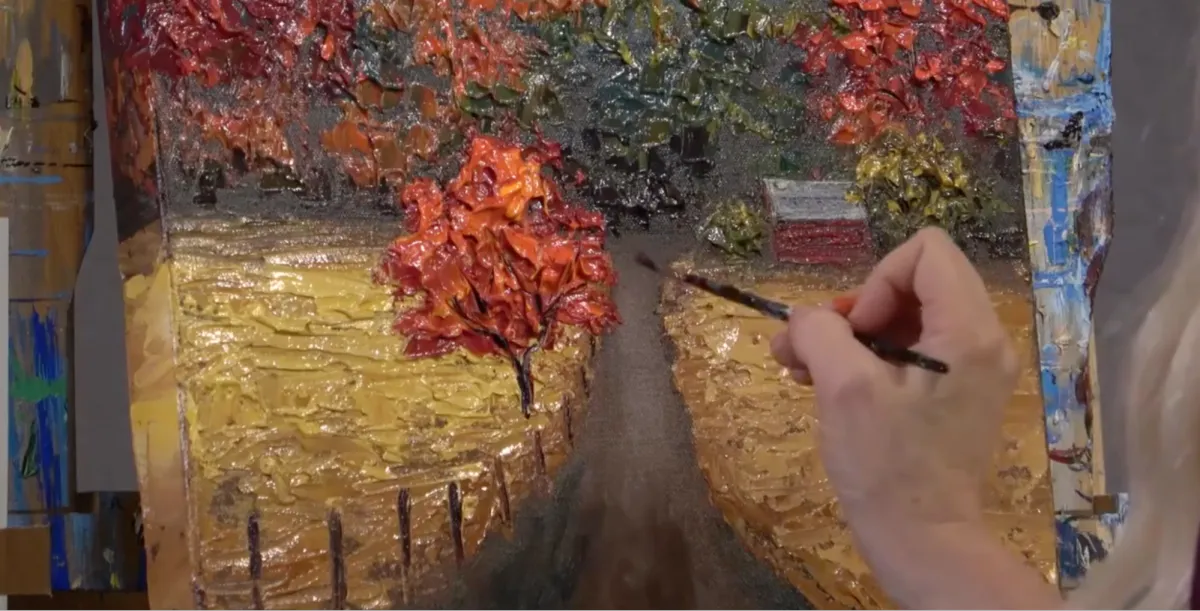
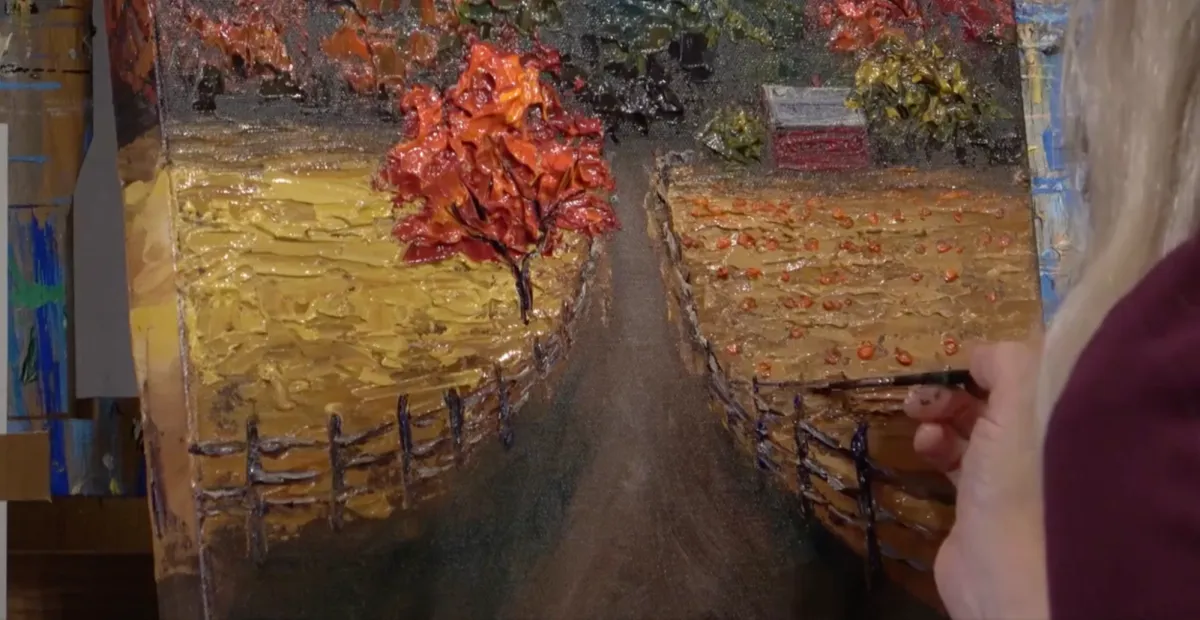
In this 4th video lesson, we’ll focus on filling in the middle-ground of our fall scene—the hay field, our pumpkin patch, and our bright orange tree. We’ll do this with more of my favorite techniques, including…
From layering to blending. This layering technique gives the hay field depth. You’ll create the brighter tops of the hay stocks and darker roots and soil with this one layering trick.
Gooey goodness. To make the lovely tree by the side of the road stand out, all you need is this extra gooey goodness. This will take a little nerve. At first, you’ll feel like you’re ruining your painting. That’s how you’ll know you’re doing it right.
Vanishing point. With this basic brush technique, you give your scene more depth and your road more character. It welcomes your eye right into the center of the painting and down the stretch of road to the background.
Fence popping. This light coating gnarls your fence posts into existence, giving it a little pop as it rises to reach the foreground.
Pumpkin pox. With these two drip-drop layers of orange, you’ll love how easy it is to harvest your pumpkin fields.
Harvesting the Middle Ground
Earthy Road
Texturizing
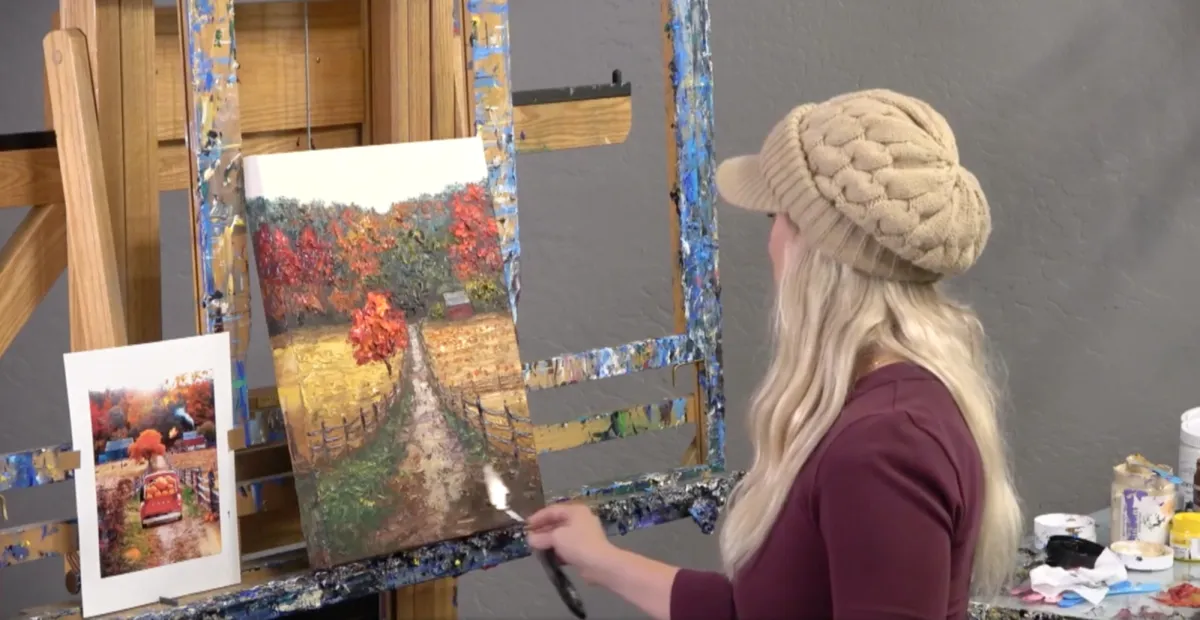
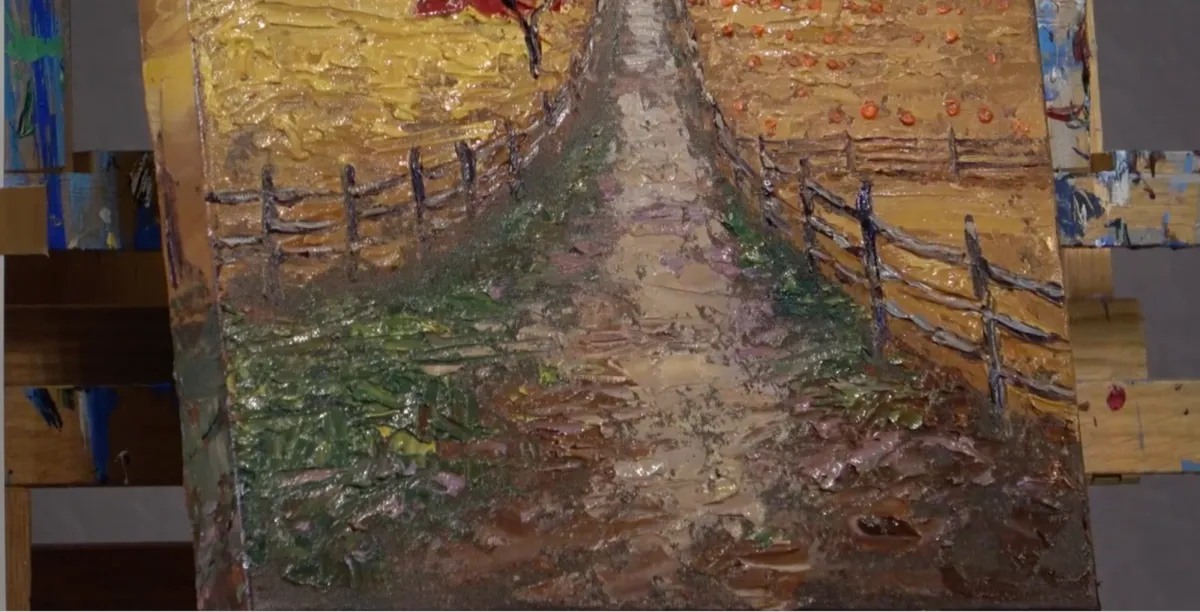
Video #5 - Farmyard Road
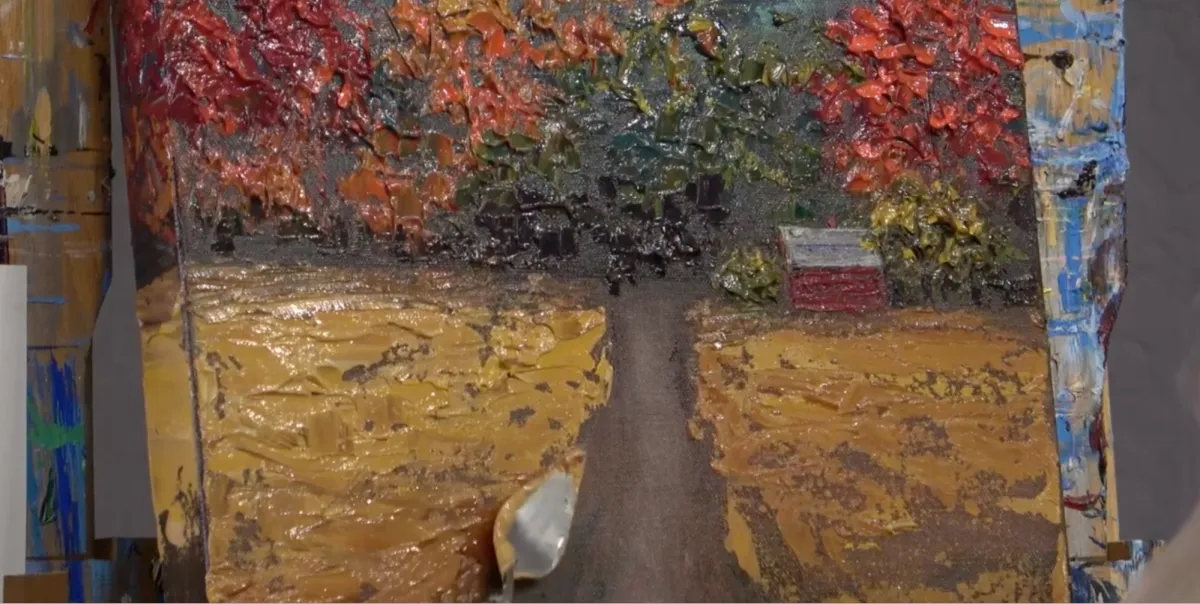
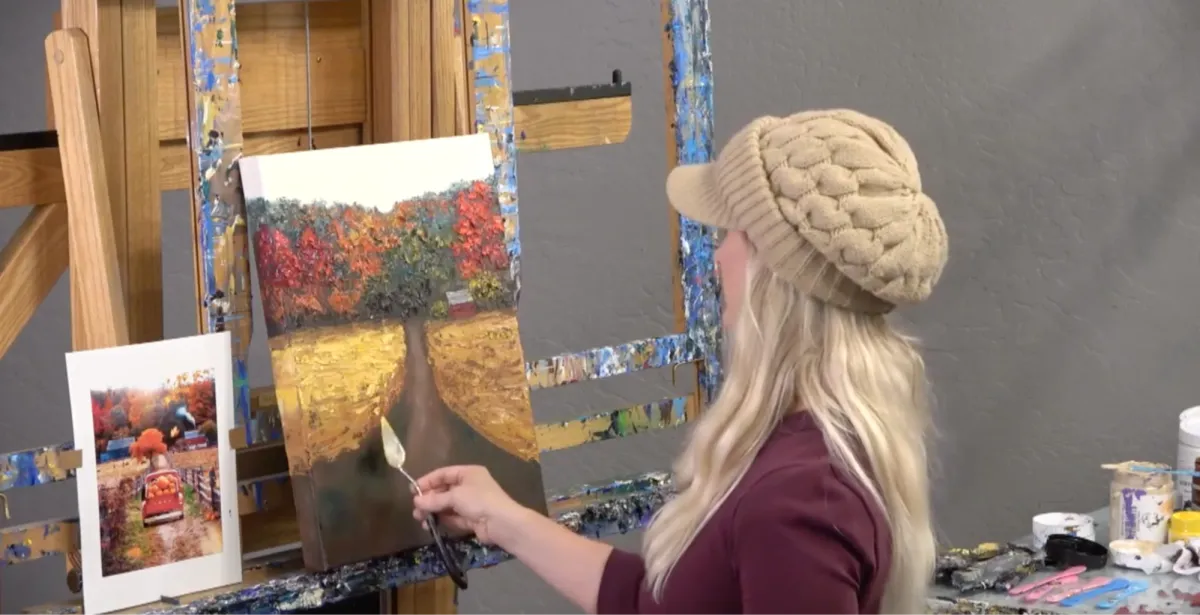
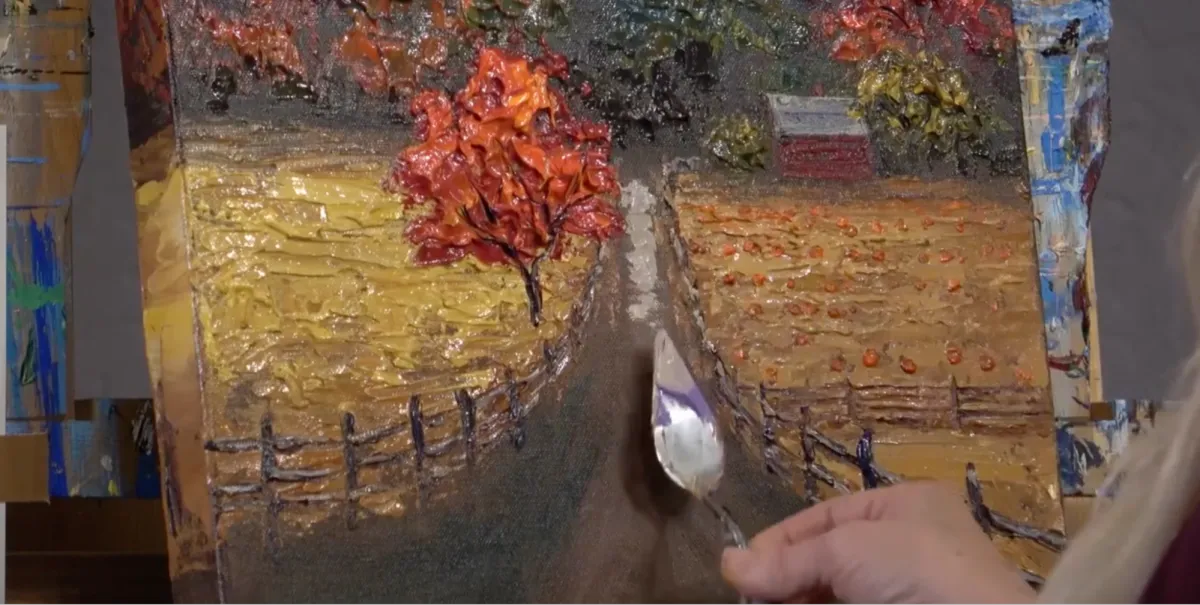
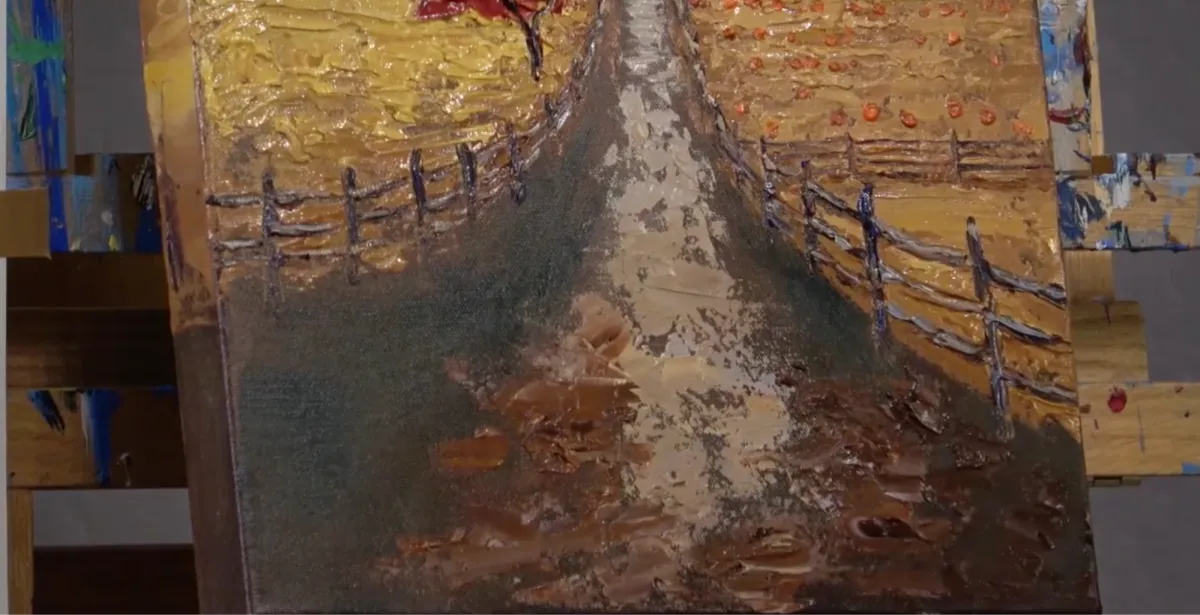
In video lesson #5, we’ll prepare our farmyard road. This upper layer increases the depth of the middle of the painting and sets the stage for our truck.
We’ll use some of the simplest techniques of the entire painting, such as…
The “throw down.” This messy move with your palette knife creates that realistic country road mixture of gravel and dirt almost instantly.
Lawn layering. Highlighting the road with grassy overgrowth using a more wild and chaotic (yet purposeful) stroke.
Foreground splotching. Tipping the tops of the grass with simple splotches that gradually bring our road into the foreground.
Shadow casting. My killer color combo for light shadow accents.
Your Confidence Will Soar!
Imagine how great you’re going to feel when you stand back from your canvas and see what you’ve accomplished. Imagine how much this painting will brighten up your home.
And just imagine how much your children, grandchildren, and friends will love your painting.
Soon, you’ll have conversations that go something like this…
“Where did you get that painting, Mom?”
Oh, I’ve been taking a painting class.”
“What? YOU painted that? Oh my gosh! It’s gorgeous!”
Imagine how great that’s going to feel.
And in addition to learning how to paint “Snowy Sentinel,” when you join this course…